

Key Takeaways
- WordPress zero day exploits are often weaponized within hours of vulnerability disclosure – the median time to mass exploitation is just 5 hours – long before most site owners can update plugins or themes.
- Virtual patching with an edge Web Application Firewall (WAF) blocks exploit payloads such as sql injection, RCE, and authentication bypass before PHP or WordPress code executes on the origin server.
- Atomic Edge delivers CVE-aware virtual patching for WordPress, deploying mitigation rules globally in minutes via a simple A or CNAME record, without full DNS delegation.
- In 2025, 11,334 new vulnerabilities were found in WordPress, and 46% of vulnerabilities were not fixed before public disclosure – making an independent protection layer essential.
- A layered security strategy combining edge protection, WordPress hardening, and disciplined patch management is the most effective defense against serious vulnerabilities and exploited vulnerabilities in plugins.
The Zero-Day Threat in WordPress: Why Patching Alone Is Not Enough
In May 2026, security researchers disclosed a critical authentication bypass in Gravity SMTP, a popular WordPress plugin for transactional email. Within weeks, automated scanners launched roughly 788,000 exploit attempts against approximately 77,000 wordpress websites. Most site owners had not yet applied the vendor patch. By the time many responded, attackers had already used the flaw to access sensitive data through password reset flows and gain access to admin accounts.
This is the reality of a zero day vulnerability: the vendor and site owners have had zero days to fix it. The term also applies to older “forever day” flaws in abandoned plugins where no patch will ever arrive, and the vulnerability exists indefinitely. Both categories represent an urgent security problem.
The WordPress ecosystem saw 11,334 new vulnerabilities in 2025, with 91% found in plugins. Alarmingly, 46% of vulnerabilities were not fixed in time for public disclosure, meaning wordpress plugins shipped to production with known, unpatched flaws. For wordpress security teams operating in enterprise environments, the “Window of Vulnerability” – from initial vulnerability disclosure through vendor releases to actual deployment on production – can stretch days or weeks. Staging tests, compatibility checks, change freezes, and holiday traffic all extend the gap.
Without an independent protection layer, wordpress websites remain exposed to zero day attacks and n-day exploit campaigns even if owners patch quickly.
How Zero-Day Exploitation Works in the WordPress Threat Landscape
WordPress powers over 40% of the web. That scale, combined with heterogeneous hosting and a vast ecosystem of third-party plugins and themes, makes it the single largest collection of attack surface for web-based threats. Most vulnerabilities are directly connected to plugin and theme code, not wordpress core itself, though core flaws like the 2026 “wp2shell” RCE chain (CVE-2026-63030) demonstrate that even core is not immune.
The exploit lifecycle follows a predictable pattern. After discovery – sometimes via a bug bounty program, sometimes by a malicious actor reviewing source code – a proof-of-concept appears on public feeds. Automated scanning bots parse CVE databases, social media, and vulnerability disclosure feeds to fingerprint wordpress plugins from HTML, JavaScript, and REST API responses. Tailored payloads follow within hours. The median time to mass exploitation for vulnerabilities is 5 hours.
AI-powered tools are accelerating this cycle. In 2026, Google Threat Intelligence confirmed the first zero day exploit believed to be assisted by AI, and the rise of vibe coding practices has introduced insecure plugin code at scale – making detection of novel exploit variants harder for defenders. Attackers now rely on large language models to parse PoCs and generate payload mutations that evade naive signature-based detection.
Edge devices and fronting infrastructure – CDNs, reverse proxies, load balancers – are now critical defensive control points. Atomic Edge continuously monitors public and private threat intelligence sources, including CVE feeds and exploit PoCs, to anticipate which new vulnerabilities will be mass exploited next.
What Is Virtual Patching for WordPress?
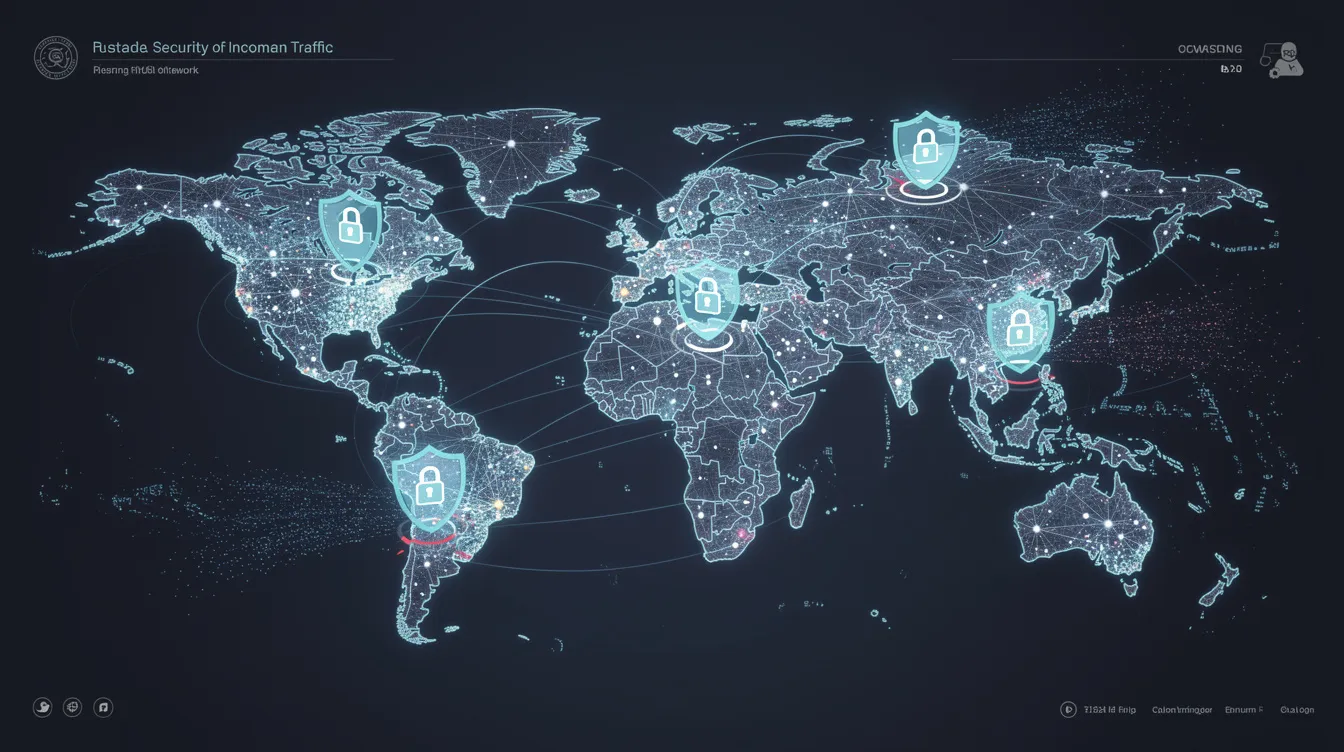
Virtual patching is the practice of deploying compensating security controls at the HTTP request/response layer to neutralize exploit payloads without modifying application source code. A WAF at the edge inspects HTTPS network traffic – URLs, headers, query strings, POST bodies, JSON payloads, and file uploads – for signatures and behavioral patterns matching known exploit techniques. Web Application Firewalls can block exploit attempts before patches are available, serving as the first line of defense.
The distinction between generic and targeted virtual patches matters. Classic OWASP Top 10 signatures catch broad categories like sql injection via regex patterns. CVE-specific virtual patches go further: they enforce strict parameter allowlists on known vulnerable endpoints, block specific HTTP methods on affected paths, or reject malformed data shapes unique to a particular plugin flaw. Input validation at this layer helps prevent improperly formed data from entering systems at all.
Speed and accuracy are crucial for effective vulnerability mitigation. Virtual patching can mitigate vulnerabilities before mass exploitation occurs – often hours ahead of when most site owners can safely test and deploy a vendor patch. Atomic Edge expresses these as rule sets combining path matching, method constraints, IP reputation, parameter validation, and anomaly scoring. Once vendor releases are broadly adopted, Atomic Edge retires CVE-specific rules to avoid rule bloat and false positives. Virtual patching does not replace vendor patches, but it dramatically shrinks the window during which exploited vulnerabilities are viable on production sites.
Edge WAF vs On-Server Security Plugins: Architectural Differences
The architectural distinction is fundamental. An edge WAF like Atomic Edge runs before requests reach the origin server: it terminates TLS, parses HTTP, and applies rules at line rate. On-server security plugins execute inside WordPress after PHP has bootstrapped – meaning wp-load.php, database initialization, and plugin hooks must all complete before any protection logic fires.
This ordering matters for several reasons:
- Resource consumption: During a zero day scanning wave, millions of requests may target a popular plugin vulnerability. If each request boots WordPress and hits the database before a plugin can evaluate it, origin CPU, RAM, and MySQL connections saturate rapidly. Edge filtering preserves origin TTFB and cache hit ratios.
- Failure modes: If PHP-FPM workers are exhausted or the web server hits connection limits, on-server security plugins may never execute. The site experiences denial-of-service or partial exploit success. Next-generation firewalls operating at the edge block unknown zero-day malware effectively because they operate independently of the origin stack.
- Bypass risk: Certain zero day exploits – unauthenticated remote code execution via deserialization, memory exhaustion, or path traversal – can crash PHP before plugin hooks activate.
In 2025, only 26% of vulnerability attacks were blocked by traditional defenses, which underscores the limitations of relying solely on in-application security.
Consider a concrete scenario: WPMaps Pro (CVE-2026-8732) saw 3,600 exploit attempts in a single day. A site protected only by an on-server plugin would absorb all that traffic at the PHP layer. A site fronted by Atomic Edge would block those payloads at the edge, with zero origin load and no risk of service degradation.
Atomic Edge also provides a lightweight companion WordPress plugin for malware scanning and observability inside wp-admin, but the critical zero day mitigation happens at the edge before WordPress loads.

Anatomy of Zero-Day Defense: How Virtual Patching Stops Common Exploit Classes
Most WordPress zero day attacks map to a few exploit classes: SQL Injection, Remote Code Execution, Broken Authentication/Authorization, and arbitrary file upload. Here is how an edge WAF intercepts each.
SQL Injection remains the most common vector. Attackers inject malicious queries through plugin endpoint parameters – for example, a vulnerable reqID field expected to be numeric. Atomic Edge applies both generic SQLi detectors and vulnerability-specific rules that enforce strict parameter allowlists (e.g., ^[0-9]+$) on known affected routes. Any non-conforming input is blocked before it reaches the database where hackers could access or exfiltrate sensitive data.
Remote Code Execution exploits – such as the Total Upkeep plugin’s unvalidated compression_level parameter leading to proc_open() abuse – involve command injection, insecure deserialization, or file inclusion. Edge rules detect dangerous tokens, unusual encoding patterns, and deviations from expected request schemas. This prevents attackers from planting malware or executing arbitrary code on compromised systems.
Authentication Bypass and Broken Access Control flaws exploit logic gaps in login, password reset, or privilege escalation flows. The Hunk Companion plugin, for example, had missing capability checks in REST API endpoints, leading to roughly 9 million blocked exploit attempts over two weeks. Atomic Edge enforces per-path method and parameter policies with rate limiting to neutralize these vectors and prevent further attacks.
Arbitrary File Upload vulnerabilities, like the Ninja Forms File Upload flaw that saw 5,100 exploit attempts on disclosure day, allow webshell planting. Atomic Edge inspects multipart/form-data payloads, validates file extensions against MIME types and magic bytes, and blocks suspicious uploads to wp-content or custom upload paths.
In each case, targeted mitigation rules deployed at the edge protected customers before the vendor fix reached most users – buying critical hours during which the software remained unpatched.
Threat Intelligence: Fuel for Accurate WordPress Virtual Patching
Effective virtual patching is fundamentally a threat intelligence problem. Organizations need threat intelligence to deploy timely virtual patches, and that intelligence must be both fast and precise.
Atomic Edge monitors a range of sources:
- Public CVE databases and NVD entries
- WordPress-specific vulnerability feeds
- Bug bounty program disclosures and coordinated vendor communications
- Exploitation chatter on research forums and social media
- Honeypot telemetry from real attack traffic
Understanding vulnerability notifications allows for timely responses to new threats. Atomic Edge correlates vulnerability disclosure data with customer configurations, identifying which domains run specific vulnerable wordpress plugins, themes, or custom code patterns. Its internal research team builds and validates exploit PoCs in controlled lab environments to understand exact payload shapes before creating mitigation rules.
Threat intelligence is essential for proactive security measures against zero-day vulnerabilities. Advanced threat intelligence can detect subtle signs of malicious behavior – such as emerging scanning patterns against a newly disclosed endpoint – before mass exploitation begins. In 2025, 33 highly critical vulnerabilities were found in premium WordPress components, and 76% of vulnerabilities in premium components were exploitable. Threat intelligence helps identify vulnerabilities before exploitation occurs, allowing Atomic Edge to push rules as close as possible to – or ahead of – public disclosure.
Atomic Edge exposes WAF logs and blocked request details in its dashboard, allowing security teams to verify that virtual patches are functioning and to tune custom rules where application-specific logic requires it. Security reports generated from these logs support compliance and incident response workflows.
Designing an Edge-Centric Zero-Day Protection Architecture for WordPress
Zero-day protection encompasses proactive behavior-based and layered security controls. An edge-first security model treats the WAF/CDN as the primary control point, with host-based and in-WordPress controls as additional defense-in-depth layers.
The reference architecture flows as follows: user browser request → Atomic Edge edge POP (TLS termination, WAF inspection, rate limiting, geo filtering, page rules, virtual patching) → origin web server / PHP-FPM → WordPress core, plugins, and database. Every malicious request is evaluated and blocked before it can target the origin.
Atomic Edge page rules enforce different protections on specific paths. For example, stricter controls on /wp-admin, /wp-json/, and /wp-content/uploads/ can coexist with relaxed policies for static assets. WooCommerce checkout endpoints receive tuned rules that avoid disrupting legitimate transactions.
Geo filtering and IP reputation reduce attack surface further. Blocking wp-login.php and XML-RPC access from regions with no legitimate administrative activity eliminates entire categories of network traffic from reaching the origin. Disabling unnecessary features like file editing and XML-RPC at both the edge and WordPress level compounds this benefit.
Rate limiting and behavioral analysis at the edge absorb credential stuffing, plugin-specific exploit scanning, and volumetric probing that often accompanies new vulnerabilities. This architecture protects not only against zero day exploits in public plugins but also reduces risk from custom code bugs in bespoke themes – including insecure code produced by companies using rapid development practices or AI-assisted generation where the code may not have been thoroughly audited.
Operationalizing Virtual Patching: Monitoring, Logs, and Incident Response
Virtual patching is not a “set and forget” mechanism. It must be integrated into ongoing security operations to remain effective.
Monitoring logs can help detect unusual activity and potential breaches. Security teams should watch for:
- Spikes in blocked requests by specific WAF rules
- Sudden increases in RCE or SQLi payloads targeting particular plugins
- Anomalous traffic patterns to sensitive WordPress endpoints like wp-login.php or REST API routes
- File Integrity Monitoring tools can detect unexpected changes in PHP files and plugins on the origin, signaling a possible breach that bypassed other controls
A practical zero day incident response playbook looks like this:
- Confirm the attack pattern in Atomic Edge WAF logs
- Enable stricter relevant virtual patches or emergency rules
- Consider temporarily disabling the vulnerable plugin in WordPress
- Coordinate a safe update window with staging validation
- Respond to stakeholders with security reports from the dashboard
When legitimate application behavior is impacted, security teams can use Atomic Edge’s rule controls, exceptions, and path-based bypasses to resolve false positives while keeping generic protections active. Periodic reviews – monthly is a reasonable cadence – should retire CVE-specific rules once plugin security updates have reached near-complete deployment across managed sites.
For agencies and multi-site operators, Atomic Edge’s multi-domain management propagates virtual patching policies across client portfolios while preserving per-site customizations, ensuring every customer domain is protected without manual duplication.
Enabling Instant Virtual Patching with Atomic Edge in Under 2 Minutes
Atomic Edge is deployed as an edge WAF in front of existing hosting using simple DNS A or CNAME records. No full DNS delegation or nameserver changes are required.
Onboarding steps:
- Sign up at atomicedge.io (free tier available, no credit card required)
- Add your domain and verify ownership
- Configure your origin IP or hostname and choose TLS options
- Receive the required A or CNAME records for your DNS provider
- Update your DNS – within minutes, global resolvers route HTTPS traffic through Atomic Edge PoPs
Basic OWASP protections and generic WordPress rules activate immediately. CVE-aware virtual patching rules are continuously updated across the edge network as Atomic Edge publishes new mitigation rules to detect and block emerging threats.
The optional Atomic Edge WordPress plugin can be installed from wp-admin to provide deeper visibility into which virtual patches apply to which installed wordpress plugins and to enable malware scanning and observability. This works regardless of whether you run cPanel, Nginx, LiteSpeed, or containerized hosting – Atomic Edge operates purely at the HTTP layer.
After going live, use Atomic Edge’s analytics dashboard to compare attack traffic, blocked zero day payloads, and origin resource usage. The difference in origin load is typically dramatic, regardless of whether visitors arrive from a modern browser or legacy clients like internet explorer.
Best Practices for Comprehensive WordPress Zero-Day Protection
Virtual patching is central, but it must be combined with disciplined WordPress operations. Here is a practical checklist:
- Patch management: Maintain staging environments, defined change windows, and documented SLAs for applying plugin, theme, and wordpress core updates once the vendor fix is tested. Regular plugin updates are crucial for WordPress security. Keeping WordPress, plugins, and themes updated reduces exposure to known exploited vulnerabilities.
- Attack surface reduction: Reducing the attack surface involves deleting unused plugins and themes, especially those with no updates in two or more years or with known public disclosure of critical wordpress vulnerabilities.
- Server hardening: Harden server configurations by using updated PHP versions and secure file permissions. Adopting the principle of least privilege reduces the impact of potential vulnerabilities across systems and database credentials.
- Authentication: Implementing Multi-Factor Authentication improves security for privileged accounts. Use Atomic Edge page rules to IP-allowlist wp-admin access.
- Backups: Regular automated backups should be stored off-site for recovery after an exploit. This ensures you can respond and recover even if a site is compromised.
- Continuous assessment: Subscribe to WordPress security mailing lists, run vulnerability scanners, and correlate results with Atomic Edge logs. Periodic penetration testing focused on plugins and custom code helps mitigate vulnerabilities before they are exploited at scale.
Treat WordPress as part of your broader application security program, integrating Atomic Edge into existing SIEM, incident response, and governance processes.

Conclusion: Staying Ahead of WordPress Zero-Days with Edge Virtual Patching
Zero day vulnerabilities in wordpress plugins and themes are inevitable. The WordPress threat landscape will only grow more hostile as the ecosystem expands and attackers leverage AI to accelerate exploit development. The question is not whether a day vulnerability will affect your stack, but how quickly you can shrink the window during which it can be successfully exploited.
Edge-based virtual patching with a specialized WAF like Atomic Edge closes the practical gap between vulnerability disclosure and safe patch deployment in production. By filtering malicious network traffic before it reaches WordPress, Atomic Edge ensures that your origin remains protected – even when a patch has not yet been deployed or tested.
Atomic Edge’s combination of CVE-driven threat intelligence, WordPress-aware mitigation rules, rate limiting, geo filtering, and page rules forms a durable control plane that sits in front of any hosting provider. It works for single-site owners, agencies managing client portfolios, and enterprise security teams responsible for mission-critical web applications.
Adopt a defense-in-depth mindset: keep WordPress components updated, minimize installed plugins, monitor logs, and rely on Atomic Edge to absorb exploit traffic during high-risk windows. Start with Atomic Edge’s free tier, protect a test WordPress site within minutes using A or CNAME onboarding, and roll out edge zero day protection across your portfolio – no credit card required.
Frequently Asked Questions
Below are common implementation and strategy questions about WordPress zero-day protection and Atomic Edge not fully covered in the main body.
Does virtual patching mean I can delay updating my WordPress plugins?
No. Virtual patching is a temporary mitigation, not a permanent substitute for vendor updates. It buys time to test and deploy patches safely without rushing unverified changes into production. Leaving outdated components indefinitely increases exposure to new exploit variants, logic bugs, and non-HTTP attack vectors that WAFs cannot cover. For example, a vulnerability in plugin source code might be exploitable through WP-CLI or cron jobs that bypass HTTP entirely. Use Atomic Edge to stay protected during patch rollout windows while still maintaining aggressive update policies and applying security updates promptly.
How does Atomic Edge handle zero-day vulnerabilities that are not yet publicly disclosed?
Atomic Edge can mitigate some pre-disclosure threats using generic behavioral rules for sql injection, RCE, and path traversal – even before specific vulnerability signatures exist. When Atomic Edge receives coordinated disclosure information or detects emerging exploit patterns in its telemetry, it can rapidly ship provisional rules that shield customers ahead of broad public disclosure. True unknown zero-days cannot be fully eliminated by any single tool, but edge-layer anomaly detection, strict path policies, and rate limiting significantly reduce the success rate of attacks that target undisclosed flaws across your software stack.
Will an edge WAF like Atomic Edge break my WooCommerce checkout or custom APIs?
Overly generic WAF rules can cause false positives, especially for complex WooCommerce flows or JSON-heavy custom APIs. Atomic Edge’s WordPress- and CVE-aware rules are tuned to recognize common commerce and REST patterns, reducing the likelihood of blocking legitimate transactions. Customers can use Atomic Edge page rules and rule overrides to apply stricter controls to high-risk paths while relaxing protections on checkout or API endpoints. WAF logs help quickly diagnose any issues, allowing security teams to fine-tune configurations without sacrificing protection elsewhere on the site.
Can Atomic Edge protect multisite networks and large portfolios of client sites?
Atomic Edge is designed for scalability. Agencies and companies can manage multiple domains and WordPress multisite networks from a single dashboard. Virtual patching rules for widely exploited vulnerabilities are applied across all protected domains automatically, while per-site custom rules and page policies can still be configured individually. Centralized analytics let teams see which sites are targeted by which zero day exploits, enabling prioritized hardening and plugin updates across the portfolio – a critical capability for organizations that must detect and respond to threats across dozens or hundreds of wordpress websites simultaneously.






