
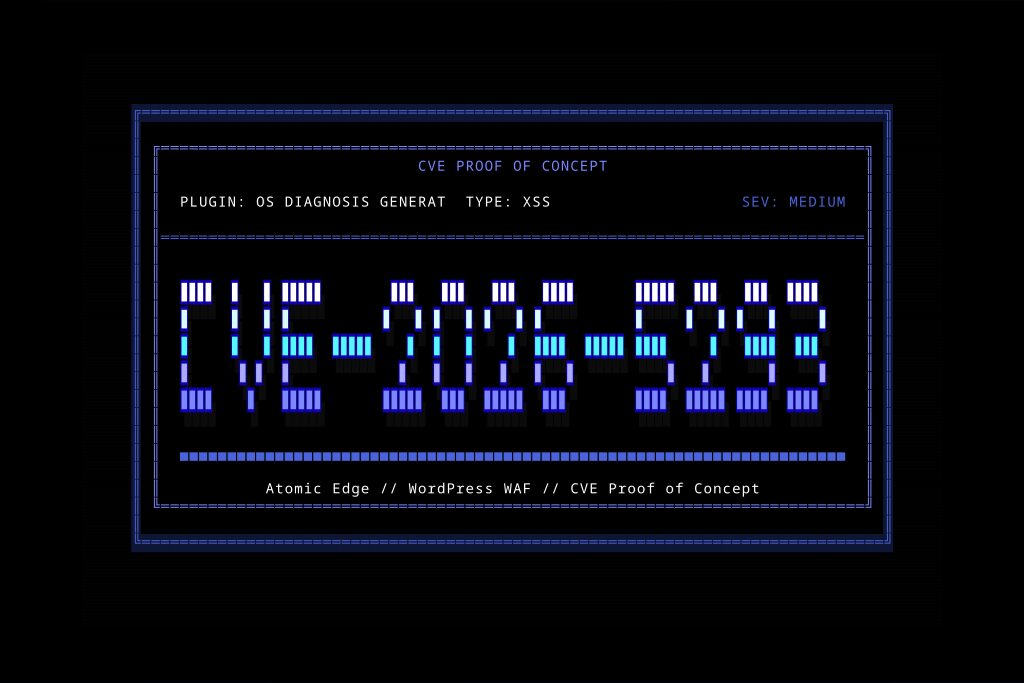
Atomic Edge analysis of CVE-2026-5293 (metadata-based): This vulnerability affects the 診断ジェネレータ作成プラグイン (Diagnosis Generator) plugin for WordPress, version 1.4.16 and below. It is a stored cross-site scripting (XSS) vulnerability with a CVSS score of 6.4 (medium severity). An authenticated attacker with subscriber-level access can inject arbitrary JavaScript into theme files via the ‘js’ parameter. The injected script executes when a user views a page containing the diagnosis form shortcode.
The root cause, inferred from the CWE classification (CWE-79) and the vulnerability description, involves two distinct failures. First, the themeFunc() function, hooked to ‘admin_init’, processes theme update requests without capability checks. This means any authenticated user, including subscribers, can trigger the functionality. Second, the save() function uses stripslashes() which removes WordPress’s magic quotes protection, and the plugin lacks proper input sanitization. These findings are inferred from the metadata as no source code is available.
Exploitation requires authentication. An attacker logs in as a subscriber then sends a POST request to /wp-admin/admin-ajax.php or directly to a plugin endpoint. The request includes the ‘js’ parameter containing a malicious JavaScript payload, such as a script tag or event handler. The attacker also provides a theme parameter (likely ‘theme’ or similar) to target a writable theme file. The plugin saves the payload to the theme file without sanitization. The payload executes when any user (including administrators) visits a page embedding the diagnosis form shortcode.
Remediation requires the plugin developer to add capability checks in the themeFunc() function, ensuring only users with the ‘manage_options’ capability can update theme files. The plugin must implement proper input sanitization for the ‘js’ parameter, using WordPress functions like wp_kses() or sanitize_file_name() as appropriate. Using stripslashes() should be replaced with more secure data handling. Since no patched version is available, site administrators should disable the plugin or restrict subscriber capabilities.
The impact is moderate but significant. An attacker can execute arbitrary JavaScript in the context of a victim’s session when they view a page with the diagnosis form shortcode. This enables session hijacking, defacement, phishing for credentials, or redirecting users to malicious sites. The CVSS Confidentiality and Integrity impacts are rated Low, but the scope change (S:C) means the vulnerable component affects resources beyond its original scope. Privilege escalation is not directly possible, but the stored payload could lead to administrator-level compromise if exploited against an admin user.







